

This Girl Can! Be Revolutionary
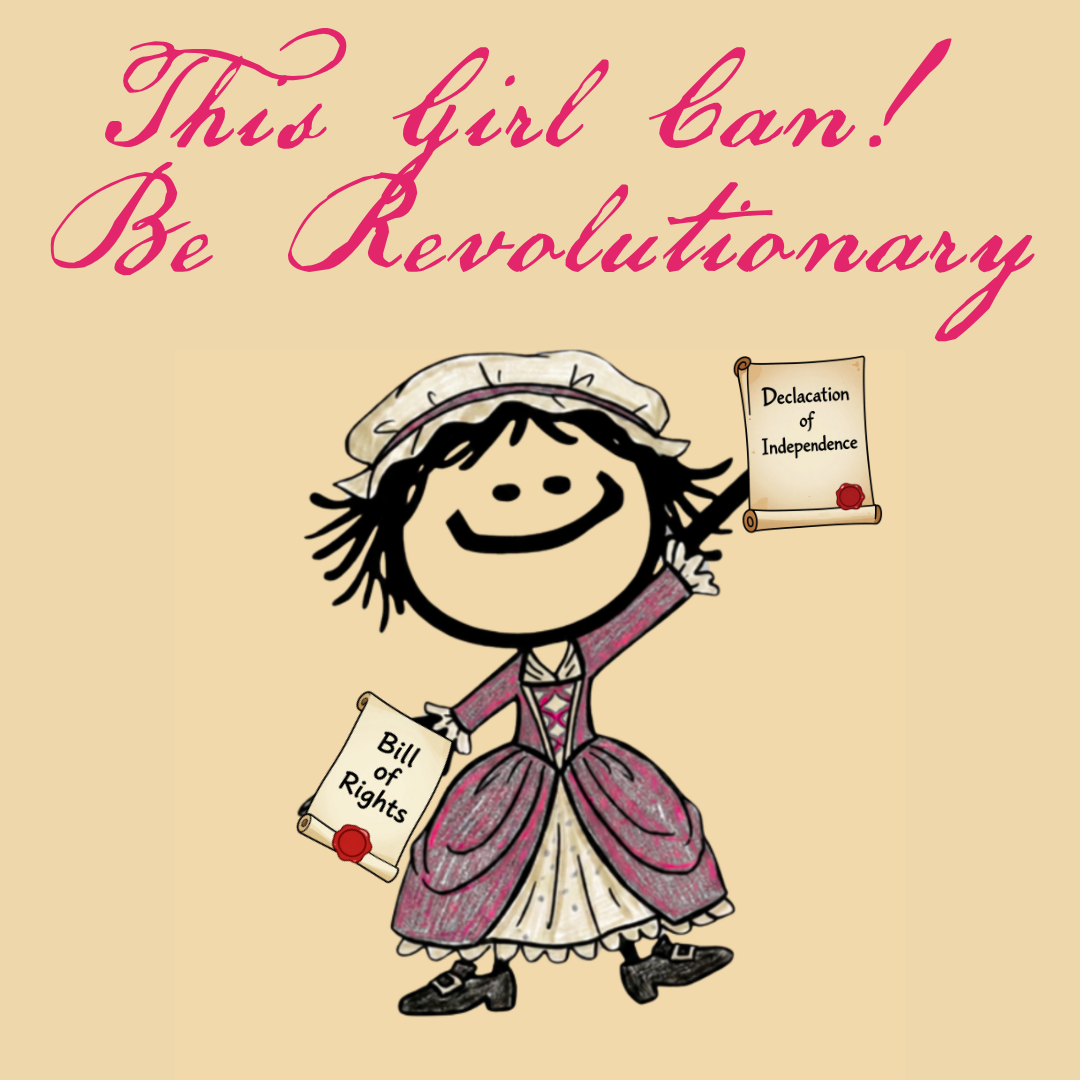
As America celebrates its 250th year, who do you think of when you reflect on this nation’s founding? Whose stories do you know, and which figures from history come to mind?
Most of us think of John Trumbull’s iconic painting and see all the “guys” at the signing of the Declaration of Independence. Or we remember seeing Emmanuel Leutze’s Painting of ‘Washington Crossing the Delaware’ in our history books. There, of course, are the Battles of Lexington and Concord and the “shot heard round the world” in 1775, the Battle of Saratoga in 1777 and the Battle of Yorktown in 1781 which forced the British to surrender.
But, where were the women during all this time of strife, protest, contentious debates, and war? If we are to just look at traditional resources and textbooks, we would think that women had no role in the founding of this country.
250 years later it is time to fix that perception!
Take for example, Margaret Cochran Corbin, the first woman to receive a military pension. When her husband John went to war, she went with him. Many women during the war became “camp followers”, doing laundry, cooking and tending to the wounded. Margaret, however, put herself literally in the line of fire. In 1776, when her husband went to fight in the Battle of Fort Washington, Margaret dressed as a man and followed him into battle, helping to load his cannon. When he was fatally wounded, Margaret stepped up and fired the cannon herself. She, too, was hit and was unable to use her left arm for the rest of her life.
In 1782, Deborah Sampson asked the question,
"Why can I not fight for my country, too?"
She disguised herself as a man named Robert Shurtleff and joined the Fourth Massachusetts Regiment. For over two years, her real identity went undetected. She received a gash in her forehead from a sword and was shot in her thigh, and extracted the bullet herself. She was the only woman to receive a full military pension from the United States government.
There was nothing prudent about Prudence Cummings Wright. With all the men off in battle, Prue would lead an armed militia to defend the town’s covered bridge to stop the smuggling of information North to Canada. The women of her militia captured the spies as they were crossing the bridge, taking their documents and holding them prisoner, preventing the British from knowing the plans of American troops.
Perhaps one of the few women who comes to mind when we think about this time in history would be Betsy Ross. Betsy may be best known for showing George Washington how to make a five-pointed star and sewing the first American flag, but she was also a businesswoman, having taken over her late husband’s upholstery business and worked on uniforms, tents, and flags for the Continental Army.
Yes, women were running things in 1776! In fact, if you have a really close look at the bottom of the Declaration of Independence, you will see this
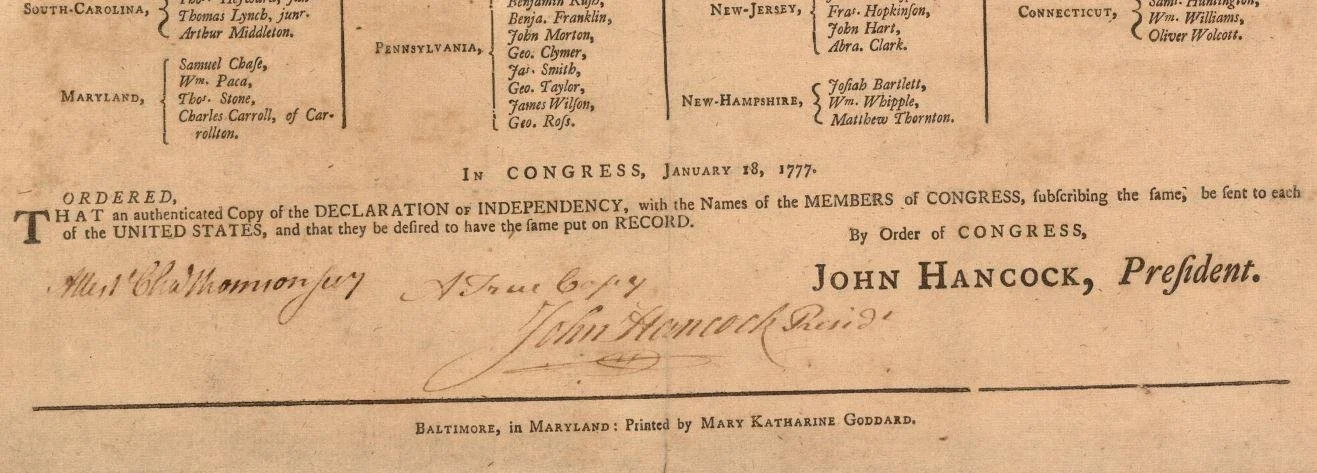
While it may not be a signature, the name of Mary Katharine Goddard is the only woman’s name to appear on the document. Mary Katharine owned a printing business in Baltimore, Maryland, and she ran the Baltimore post office, a bookstore, and also published a newspaper, the Maryland Journal, which advocated for patriotic causes. She published Thomas Paine’s ‘Common Sense’ and was the first printer to publish the Declaration of Independence in its entirety, displaying all the signers’ names. She boldly made the decision to include her own name at the bottom, sort of a de facto signer of the Declaration, and potentially put herself at risk for treason charges.
Women’s voices in 1776 and throughout the Revolution were NOT silent.
Mercy Otis Warren was a playwright, satirist and historian, known for her writings in support of the revolutionary cause and featuring strong women’s voices. She was an outspoken critic of the British rule and wrote plays and poems in support of the American ideals of freedom and independence. She believed in the idea of “Republican Motherhood” encouraging women to be active politically as mothers to model good citizenship for their children. An advocate for women’s education, she wrote a history of the American Revolution that included the contributions of women. Mery believed that women should freely express ideas about politics and government, despite the fact they would have no rights or vote in that government until 1920. After the war, she was critical of the way the new government was forming, with too much Federal power, she often published her political writings under a pen name, and criticizing the new Constitution and calling for individual rights and liberties to be included. Her widely-distributed pamphletswere influential in the formation of The Bill of Rights.
Phillis Wheatley was an enslaved poet and the first African American poet, and only the second woman, to have her work published. In July 1761, at the age of 6 or 7, she was kidnapped from her home in West Africa and sent to Boston on a slave ship. A Boston merchant, John Wheatley, and his wife Susanna, purchased her and named her after the ship she arrived on, Phillis. She received a highly unusual education for any girl, let alone an enslaved girl. A strong and vocal supporter of the Revolution, she would write a poem dedicated to George Washington and spoke of her own enslavement. It would be the written word that Phillis used to call for freedom and speak out against slavery. Her eventual fame gained her own emancipation in 1773. Despite knowing there was little hope of men like Washington, who praised her work, changing the circumstances of slavery, she would continue to support the Revolution and use her pen to be heard.
“Any time while I was a slave, if one minute’s freedom had been offered to me, and I had been told I must die at the end of that minute, I would have taken it—just to stand one minute on God’s earth a free woman—I would.”
~ Elizabeth Freeman
Elizabeth Freeman(“Mum Bett”) was also enslaved in Massachusetts for over 30 years. Her “mistress’ often was violent with her and in an incident where she struck her sister with a heated kitchen shovel, Elizabeth protected her sister by blocking the strike, resulting in a serious wound on her arm that would never heal. Rather than cover her arm, she left the scar visible as evidence of her mistreatment. In the increasingly abolitionist-leaning Massachusetts, this reflected poorly on the Ashleys, and the injury impeded her ability to work, all enraging her enslaver more.
When she overheard a discussion by her enslaver, Colonel Ashley, of the ‘Sheffield Declaration’, she began to question why the words “…mankind in a state of nature are equal, free, and independent of each other, and have a right to the undisturbed enjoyment of their lives, their liberty and property.”did not and could not apply to her. She sought the help of Theodore Sedgwick, a lawyer and Massachusetts delegate to the Continental Congress, who had helped to draft the Sheffield Declaration. Sedgwick, saw the case as a potential “test” to determine if slavery was constitutional under the new Massachusetts Constitution. In August of 1781, the case went to the County Court of Common Pleas of Great Barrington Massachusetts in the case known as Brom and Bett v. Ashley. Sedgwick would argue that the Massachusetts Constitution, with its language of “all men are born free and equal” set the ground for outlawing slavery. The jury agreed that Bett and Brom were not Colonel Ashley's property. While she never learned to read or write, she would change the world! helping to set a legal precedent for abolishing slavery in the Commonwealth of Massachusetts in 1783. Upon winning her freedom, she chose a new name, Elizabeth Freeman. She would go on to be a healer and work for the Sedgwicks. After 20 years, she was able to buy her own land for $75, which had a small house and barn where she lived the rest of her life, a free woman.
“I wish most sincerely there was not a Slave in the province. It always appeared a most iniquitous Scheme to me—fight ourselves for what we are daily robbing and plundering from those who have as good a right to freedom as we have. You know my mind upon this Subject.”
~Abigail Adams to her husband John
And of course, there was Abigail Smith Adams, who, while known as the second First Lady of the country and the Mother of the sixth President, was in so many ways the voice of conscience for her husband John Adams while he worked to form a new nation. Growing up, Abigail did not have a formal education as schools were exclusively for the education of boys, leaving girls with the most basic of education, helping them to be a “lady in society”. This did not sit well with Abigail. Growing up, she had a liberal father and an encouraging family. With access to a large library, she would read everything she could get her hands on and would be a staunch advocate to ensure girls had access to books and formal education. She would write to her husband,
“If you complain of neglect of Education in sons, What shall I say with regard to daughters, who every day experience the want of it....If we mean to have Heroes, Statesmen and Philosophers, we should have learned women. The world perhaps would laugh at me, and accuse me of vanity, but you I know, have a mind too enlarged and liberal to disregard the Sentiment. If much depends, as is allowed, upon the early Education of youth and the first principles which are instilled take the deepest root, great benefit must arise from literary accomplishments in women.”
In 1764, Abigail married an ambitious lawyer John Adams. Their marriage was a partnership, and though her husband John was not known to be publicly a fan of women’s rights, Abigail’s counsel throughout their marriage and numerous long separations influenced the thinking and the principles of a new nation. Famously, when he was in Philadelphia, she would stridently write to him to impress upon him that the new nation was not for men alone.
“I long to hear that you have declared an independency -- and by the way in the new Code of Laws which I suppose it will be necessary for you to make I desire you would Remember the Ladies, and be more generous and favourable to them than your ancestors. Do not put such unlimited power into the hands of the Husbands. Remember all Men would be tyrants if they could. If particular care and attention is not paid to the Ladies, we are determined to foment a Rebellion, and will not hold ourselves bound by any Laws in which we have no voice, or Representation.”
Abigail Adams would argue to her husband that women simply would not follow laws in which they were not represented. Though her own marriage was far more equal than most of the day, she understood that every woman’s right to “life, liberty, and the pursuit of happiness”, could never be relied upon to happen by the grace of her husband. Under the laws of coverture, married women did not exist under the law, with no right to own property or money. Abigail was concerned with greater protection for women under the new laws, as well as access to formal education for girls and women. She, too, like her friend Mercy Otis Warren, was a proponent of “Republican Motherhood”, believing that mothers had a vital role to play in political life and must be involved in politics to prepare their sons (and daughters) to be citizens and leaders.
Abigail was a woman in charge, she had to be. Her husband was gone for years at a time, so it was left to her to run their farm, deal with the Revolution literally at her doorstep, protect her children, engage in commerce, buy property and she would see four of her six children die.
Abigail’s lifelong influence on not only her husband but also a burgeoning nation was profound. John Adams needed her. He wrote after his election as President in 1797, “I never wanted your Advice and assistance more in my life…” Abigail was not a demure First Lady. She did not sit back. She would fervently defend her husband and his positions. She, in fact, became the “go-to” for many who wanted access to her husband. She would famously “plant” positive stories in the press about John. Some of her husband’s critics and the press believed Abigail was so instrumental in her husband’s work that she was called “Mrs. President.
Throughout her life, Abigail Adams was a voice to be reckoned with, despite a social, political, and legal culture that denied women their rights; hers was a voice that would not be silenced.
And so, while we see and learn about and reference the “Founding Fathers”, Abigail, and we, would remind us all to “Remember the Ladies”.
250 years later, we need to ensure that the women who were essential not only to the formation of a new nation, but to the running of life and home and the pursuits of free speech and liberty should never be ignored. As the National Women’s History Museum reminds us *She is NOT a Footnote! Because This Girl Can! Make HERstory.
Only by paying “particular care and attention” to telling their stories, teaching their history, and celebrating their legacies can we move forward to fulfill the promises of that preamble to the Declaration so that it is a common assumption that “all people are created equal and are endowed with certain unalienable Rights, that among these are Life, Liberty and the pursuit of Happiness.”

"There is Too Much Work to Do" Keep Marching On!
“People say, what is the sense of our small effort?
They cannot see that we must lay one brick at a time,
take one step at a time.
A pebble cast into a pond causes ripples that spread in all directions. Each one of our thoughts, words and deeds is like that. No one has a right to sit down and feel hopeless.
There is too much work to do.”
~ Dorothy Day
Yes, it's been a week! and Yes, emotions, anxiety and simple dread are filling every inch within us and around us.
Through the fog of where we are, and the blow to our hopes, however, comes clarity-get back to work!
True, it may not be as simple as "pick yourself up, dust yourself off..." but history shows us that is exactly what we need to do. Women did not just land in a space where a woman could receive over 70 million votes in her bid to be President of the United States. It was the work, the determination, the persistence and the resistance of generations of women, and men who believed in those women and their rights, to get here. Setbacks, no matter their dimensions or seismic proportion, are a part of that history, and a part of every girl's journey to stand where she wants.
With each turn of history,however, we get to do it differently, see it differently, listen differently, and move forward differently. While the lessons of this week are still to be understood one thing is certain-we don't stand still.
So, what can this girl do?
At This Girl Can! Change the World nothing that happened this week changes anything except to strengthen our commitment to girls everywhere.
Our mission has always been about inspiring every girl to know their own power. We want every girl to understand she has a voice and the right to walk into any room she chooses at any time.
We want to support every girl to have the confidence that grows with her, an unshakeable confidence and sense of self that allows her to believe in her own power to realize her dreams.
We know what happens to young girls as they enter their tween and teen years. All the amazing confidence, the girl spunk, they have erodes, and many girls simply fall off the confidence cliff.
We do not want to see any girl lose her belief in her own power.
We do not want any girl to question her place or her voice.
We do not want any girl to ever feel she does not belong...or that she can't...because we know This Girl Can!
We know that positive role models, mentors who support and show the way, learning about women's history and telling women's stories, and amplifying affirming portrayals in popular culture and media are all key to helping every girl see what is possible.
So how do we help our girls understand this week when we as adults may not yet understand. How do we help them with the hurt and disappointment that we all are carrying? How do we create the path for them to soar?
We start with acknowledging it hurts but also looking at what there is to celebrate. We point to all the women throughout history who got up the next day and kept moving forward. Though the potential was not realized THIS TIME, stepping back, sitting down, giving up, giving in will never be the way to build lasting change. These are lessons that are not about one woman, one election, but rather about how every girl can navigate her own personal journey and achieve her own goals.
To do this,however, she needs us to show her we believe in her! and help her to believe in herself.
"The important thing is don't ever give up. Don't ever give up. Don't ever stop trying to make the world a better place. You have power. You have power. And don't you ever listen when anyone tells you something is impossible because it has never been done before."
~Vice President Kamala Harris
Now more than perhaps ever before we need to support girls understanding of what is possible. No, it may not always work out, but we need to foster their confidence to get up and most especially try again and again and again.
Progress is not instant soup and learning about women's stories throughout history will show that well. Our kids are from an instant gratification culture...a two minute tik tok is about the extent of their investment of time. So teaching them that justice is slow but worth the work is essential as is showing every girl that no matter the moment, no matter the current outcome, This Girl Can! Use Her Voice...This Girl Can! Choose Her Own Path... This Girl Can! Walk into Any Room... This Girl Can! Do Something... This Girl Can! Change the World.
Keep Marching On!
“Every great dream begins with a dreamer. Always remember, you have within you the strength, the patience, and the passion to reach for the stars to change the world.”
— Harriet Tubman

Celebrating HERstory Every Day

“Well behaved women rarely make history”
~ Eleanor Roosevelt
It is #WomensHistoryMonth and in this month and every month we share our hope that EVERY girl will believe that Yes! she can make #HERstory
This #WomensHistoryMonth we celebrate the rule-breakers, the trailblazers, the fearless, and the indefatigable who said Yes! #ThisGirlCan!… and She Will! Guess what, history is filled with stories of women and girls just like YOU who made their own way, defied societal expectations and command, and bravely and independently pushed down doors, ignorance, harassment, and even threats to their lives and well-being. Every day we celebrate these women and now it is your turn-and we cannot wait to see YOU make HERstory.
Why do we study women's history? The lives of women and their role in, and impact on, our history has rarely been spotlit. We need to know women's stories, we need to look to them as models, beacons of inspiration to follow as we aspire to our dreams and follow our convictions. We need to learn about their lives and experiences. Their trailblazing paths will show us the way forward. Ensuring that every woman's story is heard and respected provides every little girl, and not so little girl, with the opportunities to understand and to know they can realize the power of their dreams because there was someone who came before them who showed that Yes! This Girl Can! Change the World. So, let’s make HERstory!
#ThisGirlCanChangetheWorld #EveryMonthisWomensHistoryMonth #TheFutureisFemale #BelieveinthePowerofYourDreams

"I desire you would remember the ladies", Abigail Adams- Celebrating Women's History Month
“... I desire you would remember the ladies and be more generous and favorable to them than your ancestors. Do not put such unlimited power into the hands of the husbands. Remember, all men would be tyrants if they could. If particular care and attention is not paid to the ladies, we are determined to foment a rebellion, and will not hold ourselves bound by any laws in which we have no voice or representation.”

Abigail Adams was not a woman who kept her opinions to herself. She did not sit idly by in Quincy Massachusetts while her husband forged a new nation. As the wife and the mother of presidents, and her husband’s closest advisor, she had a unique opportunity to influence the decisions of how a young country would be shaped and she implored her husband to “remember the ladies.” Abigail like so many women was left alone to manage the farm and raise her children while her husband was in Philadelphia and England for months and years, all in the midst of a revolution on her doorstep finding her life and her children’s lives in danger at all times. Abigail knew very well that the future of the new country would depend as much on its women as the men and she let her husband know that to not include women in the decisions and for them to have a real voice would set the new country on the wrong path. It would be 144 years until women were recognized as having the right to legally participate as a citizen with the passage of the 19th amendment acknowledging women’s right to vote, and would not be until 1965 and the passage of the Voting Rights Act that all women were allowed to vote.
“Well behaved women rarely make history”

American history is filled with stories of women, most unknown, who made their own way, defied societal expectation and command, and bravely and independently pushed down doors, ignorance, harassment and even threats to their lives and well being. Women such as Mabel Ping-Hua Lee who in a 1912 New York Times article was cited as “the symbol of the new era, when all women will be free and unhampered.” She was just 16 years old at the time and was already gaining notoriety for her work as a suffragist who had led over 10,000 in the New York suffrage parade. Mabel would go on to become the first Chinese woman to get a PhD in economics. Think of Maria Mitchell, born who on Natucket in 1818. In 1847 at the age of 29 Maria discovered a comet. She was the first female astronomer in the United States, and was also the first American scientist to discover a comet! Maria was a strong advocate for science and math education for girls and became the first female astronomy professor. Then there is Charlotta Spears Bass. Throughout the first half of the 20th century Charlotta was the editor of the African American newspaper The California Eagle. She worked as a journalist, civil rights activist, and politician...she was also the first Black woman to run for vice president of the United States in 1952. Charlotta dedicated her work to fighting what she called “The two-headed monster, Segregation and Discrimination.”
“Where there is a woman there is magic.”
Why do we study women's history? The lives of women and their role in, and impact on, our history has been overlooked for so long. We need to know women's stories, we need to look to them as models, for inspiration, to follow our dreams and convictions. We need to learn about their lives and experiences. Their trailblazing paths will show us the way forward. Ensuring that every woman's story is heard and respected let’s every little girl know there is a role model to show her that This Girl Can!
This #WomensHistoryMonth we celebrate the rule breakers, the trailblazers, the fearless and the indefatigable who said Yes! #ThisGirlCan and She Will!
Be sure to follow us to help us celebrate. For more great stories and biographies visit The National Women's History Museum and PBS Videos on Women in American History


"Dwell in Possibility"-Celebrate Your Creative Voice

This week, at a once in history Presidential innaugural celebration, 22 year old Amanda Gorman ,the former junior poet laureate of the United States, delivered the innaugural poem “The Hill We Climb”. Her powerful and inspiring piece had everyone wrapped in her words. She truly stole the show, and we will carry her words with us through these days:
"The new dawn blooms as we free it. For there is always light. If only we're brave enough to see it. If only we're brave enough to be it."
Amanda is a voice, has a voice, and uses her voice, but she could not always do that with confidence out loud and so her poetry was her outlet. “I think that passion was exacerbated by the fact that I had a speech impediment. So having an arena in which I could express my thoughts freely was just so liberating that I fell head over heels, you know, when I was barely a toddler.”

“You can’t use up creativity. The more you use, the more you have.”
Being creative, immersing ourselves in creative activities, does not require any special skill or talent, really! Pick up a pencil, a paint brush, a camera, knitting needles…sit at a piano, put on your dancing shoes, open your voice …
Who cares about what the end result, this is for you! Just be open to moving your thoughts, emotions, energies into your favorite creative outlet as a wonderful way to express how you feel, and who you are!
January is #CreativityMonth. Let's celebrate some of the extraordinary women whose creativity moves us, engage us, bring us joy, and inspire us everyday. #ThisGirlCanCreateHerWorld
“I Dwell in Possibility”




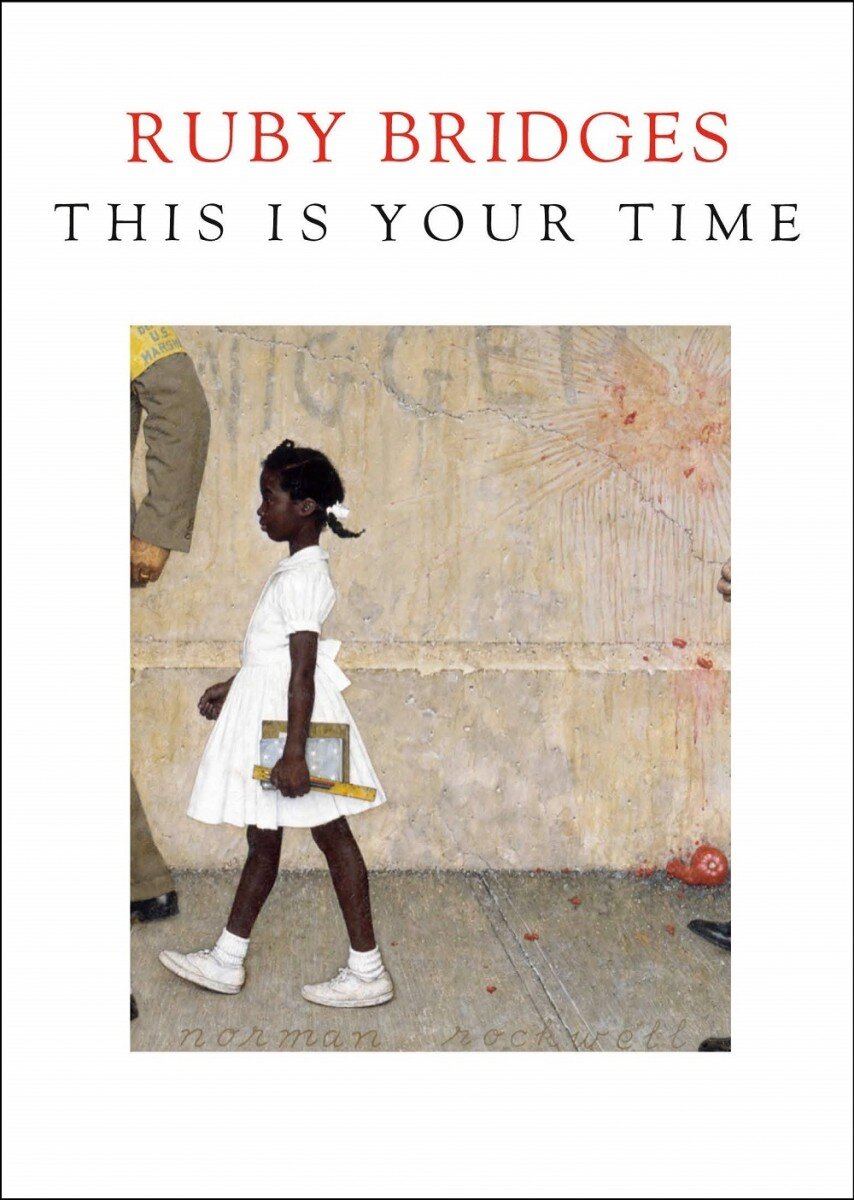
This Girl Can! Change the World...and She Did-Ruby Bridges
“Don’t follow the path. Go where there is no path and begin the trail.
When you start a new trail equipped with courage, strength and conviction,
the only thing that can stop you is you!”
Just imagine being only six years old and having the eyes of the entire world on you as you are simply trying to do what every six year old does each day, go to school. For Ruby Bridges,however, her entryway to the first grade and to school was literally blocked because of the color of her skin. 60 years ago this week Ruby Bridges became the first African American child to attend an all white school, the William Frantz Elementary School in New Orleans. As Ruby walked to enter the school, along with her brave Mom Lucille, and escorted by white federal marshals, she was met with angry white crowds shouting racial slurs and throwing things at her. That day was of course captured in Norman Rockwell’s iconic painting “The Problem We All Live With” and Ruby Bridges became the face of school integration.

Ruby and her parents didn’t give up or give in to the hatred they endured despite threats and fear, her father losing his job and shops refusing to serve them. As soon as Ruby entered the school 500 students left and never came back while other children were literally hidden away from her. She would spend the entire school year all alone in a classroom with the only teacher who would teach her, Barbara Henry who came from Boston to work in the school. In a recent interview on NPR Ms. Bridges talked about her amazing teacher "Barbara came from Boston to teach me because teachers actually quit their jobs because they didn't want to teach black kids. I remember the first day meeting her, she looked exactly like the mob outside the classroom. So I really didn't know what to expect from her,…But I remember her graciously saying, you know, come in and take a seat — and there I was sitting in an empty classroom with her for the whole year, you know, she showed me her heart. Very early on, and I realized that she cared about me, she made school fun, and ultimately I felt safe in that classroom." It would be Barbara who finally persuaded the school principal, a member of the opposition, to allow the children to meet Ruby and come together.

Ruby Bridges has spent her life as a Civil Rights icon and activist, going into schools and speaking with kids about her experiences and about racism which she tells them is a “grown up disease”. “None of our babies are born into the world knowing anything about disliking one another, or disliking someone because of the color of their skin.” she says “Babies don't come into the world like that. And so if babies are not born that way, then we as adults are the ones who are passing it on to them, and we have kept racism alive.”
Ms. Bridges has just published her third book “This is Your Time” inspired by recent social justice activism by young people throughout the country and the world. In the book she tells her own story, speaks to her work through her Ruby Bridges Foundation, explores the parallels between the 1960s and this moment while sending out a call to action to this generation to act for change. The book was published on the same day she lost her Mom and in a social media post she paid tribute to her - “Today our country lost a hero. Brave, progressive, a champion for change. She helped alter the course of so many lives by setting me out on my path as a six-year-old little girl. Our nation lost a Mother of the Civil Rights Movement today. And I lost my mom. I love you, and am grateful for you. May you Rest In Peace. Lucille Bridges (August 12th, 1934 - November 10th, 2020),"
The short and iconic walk that Ruby Bridges took over 60 years ago changed so much for so many as schools became integrated. As powerful as those steps were, however, one small girl’s extraordinarily brave act remains a very powerful and necessary inspiration for us all to take steps to keep us all moving forward not backward for social justice and equity for all children.

"Dream with Ambition" This Girl Can! Believe

"But while I may be the first woman in this office, I will not be the last because every little girl watching tonight sees that this is a county of possibilities."
Kamala Harris, Vice-President-Elect, November 7, 2020
How many times in the last 24 hours have we seen and heard little girls, ALL little girls, looking wide-eyed and smiling at images and footage of the soon to be Vice-President of the United States, Kamala Harris. How many little girls of color looked at their Mom and Dad with expressions of glee and exclaiming, “She looks like me!” The Vice-President elect has made history not only as the very first woman to be elected to higher office-about time wouldn’t you say!, but also the first woman of color and the first woman of South Asian descent -lots of glass shattered this week!
Kamala Devi Harris, a daughter of Indian and Jamaican immigrants has been elected to the second highest office in the land 100 years after the passage of the 19th amendment enfranchised women. Wearing. white, as she made her first public appearance as Vice-President elect, in honor of all who came before, the Kamala Harris spoke directly to every little girl and made it clear in NO way would she be the last to make history. It is also 55 years since the passage of the Voting Rights Act abolishing the disenfranchisement of Black Americans. 35 years ago Geraldine Ferraro was the first woman to run for Vice-President and she was asked repeatedly throughout that 1984 campaign if she was “tough enough” for the job. Whether with a stiletto or Jack Purcell All Star, Kamala Harris has kicked a door down, a very big door, and in so doing she has shown EVERY girl that Yes! This Girl Can!…and She Will! Congratulations Madame Vice-President-elect.

“And to the children of our country, regardless of your gender, our country has sent you a clear message: Dream with ambition, lead with conviction. And see yourselves in a way that others may not simply because they’ve never seen it before, but know that we will applaud you every step of the way.”
~Kamala Harris, Vice-President elect , November 7, 2020

This Girl Can! Read ALL Day

“In books I have traveled, not only to other worlds, but into my own. I learned who I was and who I wanted to be, what I might aspire to, and what I might dare to dream about my world and myself. ”
Do you remember the very first book you ever read all on your own? How about the very first time you got lost in the shelves of a bookshop or library? Do you love falling into the pages of a book so deep that everything around you just stops. A book is a magical place! The stories we read can not only transport us to other worlds, other times, other lives, but can also open us to understanding, tolerance, self discovery and the the real possibility of realizing our dreams. THAT is how powerful a book can be!
October is National Book Month, while many of us do not need a special month to celebrate our love of books and reading any excuse to reach for a book is welcome. Reading,however, is more than a joyful pastime.
For any girl growing up the characters they meet in a book can iinfluence their sense of self and help inform who they may want to be and the lives they want to aspire to. Be it Anne Shirley, Madeline, Jo March, Pippi, Elizabeth Bennet, Mary Lennox, Ramona, Hermione Granger, Meg Murry,Princess Magnolia, Matilda Wormwood, Enola Holmes, Harriet the Spy, Olivia…strong, determined, smart, driven characters who have their own brain and ther own plan allow gilrs to hold up a mirror and find their own power!
The critical importance of literacy and education for girls around the globe is palpable. When girls have literacy skills and access to education where they can learn and thrive it literally changes their world. Yet so many girls all over the globe don’t have access to books or formal education and right now more than 98 million adolescent girls around the world are not in school.
This Girl Can! encourages you to learn more and support two terrific organizations working to bring books and educational access to ALL!. First Book and Room to Read.
We know that 61% of kids from low-income families in this country do not even have a single children’s book at home. We also know that education is the magic wand for girls everywhere helping them to grow to become women with secure, healthy, impactful futures.
In celebration of National Book Month, learn more and make a donation to these two great organizations. First Book will help bring a child the gift of books and reading-for many it may be the first book they get to call their own. Room to Read's Girls’ Education Program was founded with the belief that educated women can change the world! We know they can! .Learn More about the importance of Girls Literacy and Education at Room to Read
Let’s Celebrate #NationalBookMonth with Some of our Favorite Books that inspire us, move us, bring us joy, and confirm that Yes! ALL Girls Can! Find more great Book Ideas for EVERY Girl at A Mighty Girl
“Reading is the key that opens doors to many good things in life. Reading shaped my dreams, and more reading helped me make my dreams come true.”

“Books are the plane, and the train, and the road. They are the destination, and the journey. They are home.
”

This Girl Can!...and She Did! Women Belong! Thanks to Ruth Bader Ginsburg

“Women belong in all places where decisions are being made. It shouldn’t be that women are the exception.”
Had she never been nominated to the highest court Ruth Bader Ginsburg would certainly be remembered as a single indomitable force who dedicated her life to championing women's fight for equality, and society's road toward equal justice. At every point in her life she was pushed on closed doors in her quiet, often shy, demeanor which left many having never seen her coming! She left an unparalleled legacy of justice and equality with groundbreaking cases that changed the legal landscape and this country. She is responsible for changing women's legal rights and access, but Ruth Bader Ginsburg did so much more, for every woman, for every little girl, for everyone who has ever been told-"sorry, this isn't your door" she blazed a trail in her demure yet tough as nails way- “Women belong,” she said, “ in all places where decisions are being made. It shouldn’t be that women are the exception.” and she dedicated her work and her life to ensuring just that.

“We should not be held back from pursuing our full talents, from contributing what we could contribute to society, because we fit into a certain mold––because we belong to a group that historically has been the object of discrimination.”
Ruth Bader Ginsburg fought in every corner of her life with a steely determination. She said that starting out she had three strikes against her-she was Jewish, a Woman , and a Mother-all of which meant doors that swung open for men with far less ability were not even available to be seen for her. Cancer would be an incessant presence throughout, from her Mother, to her cherished Marty, to her own numerous private battles... but nothing, not even cancer, stopped her-she worked and battled through pain and loss with a laced glove iron hand and will. She found great joy in her Notorious RBG fame and how amazing that so many little girls would have such an icon to emulate. In her first ever case as a Supreme Court justice she showed she was not there to just fill a chair but would continue her fight for equality.
In her first ever case as a Supreme Court justice she showed she was not there to just fill a chair but would continue her fight for equality.
"Sex, like race, is a visible, immutable characteristic bearing no necessary relationship to ability.
Sex, like race, has been made the basis for unjustified or at least unproved assumptions, concerning an individual’s potential to perform or to contribute to society…
These distinctions have a common effect: They help keep woman in her place, a place inferior to that occupied by men in our society."
In conclusion Justice Ginsburg quoted Sara Grimke:
"I ask no favor for my sex. All I ask of our brethren is that they take their feet off our necks."
She showed that it simply didn't matter that you were born a woman-gender was irrelevant and she worked to her last days to ensure that justice for everyone would be secure. She simply changed how society is for American women, full stop. She was a revolutionary at every step of her life who created a revolution, so may her memory be just that, a revolution that fulfills her last wish and in her death may she blaze one last irrevocable trail again for us all. Thank You Justice Ginsburg.
“In my life, what I find most satisfying is that I was part of a movement that made life better, not just for women … gender discrimination is bad for everyone.”

“I do think that I was born under a very bright star...When you think about — the world has changed really in what women are doing. I went to law school when women were less than 3% of lawyers in the country; today, they are 50%. I never had a woman teacher in college or in law school. The changes have been enormous. And they’ve just — they’ve gone much too far [to be] going back.”